Fitness Blender
Fitness Blender
I joined Fitness Blender to both guide and implement the product design transformation of their YouTube and ad-supported website model into a premium wellness subscription platform. As the sole product manager and designer, I increased velocity by establishing a design system spanning web, mobile, video, and marketing assets, simplifying and automating design workflows, and partnering closely with engineering from ideation to implementation. These foundational steps gave us the space to achieve a 1.5x boost over ad-revenue in the first two years and an ROI of 3x the cost of development by focusing on the work that actually drove growth: help members find value quickly, convert free engagement into recurring revenue, and develop new capabilities that promoted overall wellbeing, not just exercise.
Finding Value
When we introduced FB Plus, we already had over 600 workouts available with hundreds more added over the next few years. From day-one it was clear that members were struggling to find workouts they wanted to complete. We could see long search sessions and high abandonment rates in the data, but it wasn’t clear why. Rather than investing the time to test and validate assumptions, we decided to Just Ask.
Team
My Role
Product ownership, research strategy, design direction, design technology
Engineering
Technical direction, engineering leadership, full-stack development
Timeline
Research
1 Week, then ongoing
Design
1.5 Weeks
Engineering
1 Month
Beta Period
2 Months
Research Methods
Usage Statistics
Screen Recording
Surveys
Card Sorting
Focus Groups
Think Aloud Protocol Tasks
Design Pattern Matching
Feature-Flagged Beta Testing
Design Decisions
Directly engage with members for research, testing, and validation.
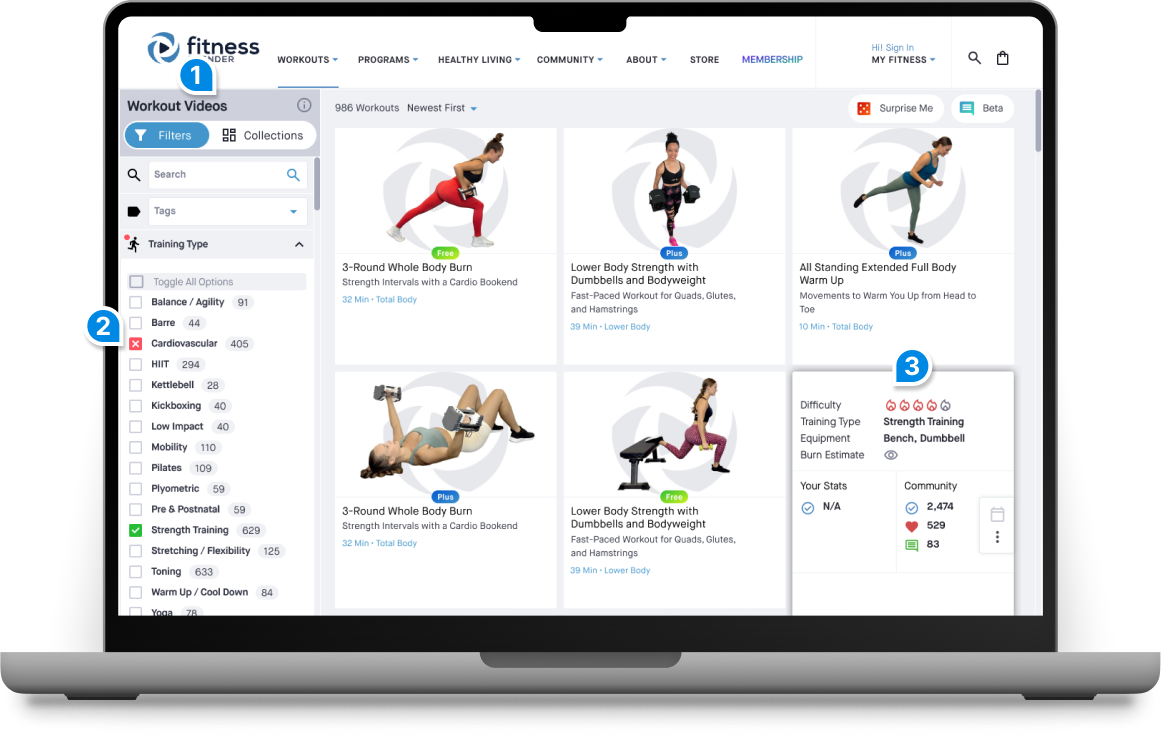
Because our audience was already active and vocal in the platform’s community, we democratized the ideation process. In hours we had statistically viable results, in days we had 18% of our Plus members respond.
Using betas as a conversion tool.
Although the advanced search features were only part of the premium membership, we opened the beta to all members. This approach gave us more validation data, generated buzz in the community, and led to conversions for members who wanted to keep using the new tools.
Pairing complexity with simplicity.
Comments and wishlist items skewed toward our long-term power users, so we also had to make sure newer or less experienced members could engage quickly. We created Surprise Me as a one-click alternative to the complex search and filter options.
Outcomes
Reduced average time to select or schedule a workout from 19 to 7 minutes.
Increased workout completion rate after selecting a workout by 37%.
Free member engagement in the beta periods led to 11% conversion to FB Plus.
Surprise Me became our most heavily used feature, often dropping search times to seconds.
Monetizing Free Memberships
Fitness Blender’s first paid products were static workout programs compiled from their free workouts. After the launch of FB Plus, the stakeholders wanted to switch programs from pay-once to a rental model, with the caveat that rental would include all features of FB Plus. The ask was simple on the surface, add a Rent Now button to programs. We knew the actual intent was nuanced and the ask was too narrow, so we challenged the stakeholders to Embrace Ambiguity and let design provide alternative solutions.
Team
My Role
Product ownership, research strategy, design direction, stakeholder alignment
Engineering
Technical direction, engineering leadership, full-stack development
Timeline
Research
1 Week
Design
2 Days
Engineering
2 Months
Research Methods
Focus Groups
Competitive Analysis
Design Pattern Matching
Design Decisions
Program rental vs. platform rental.
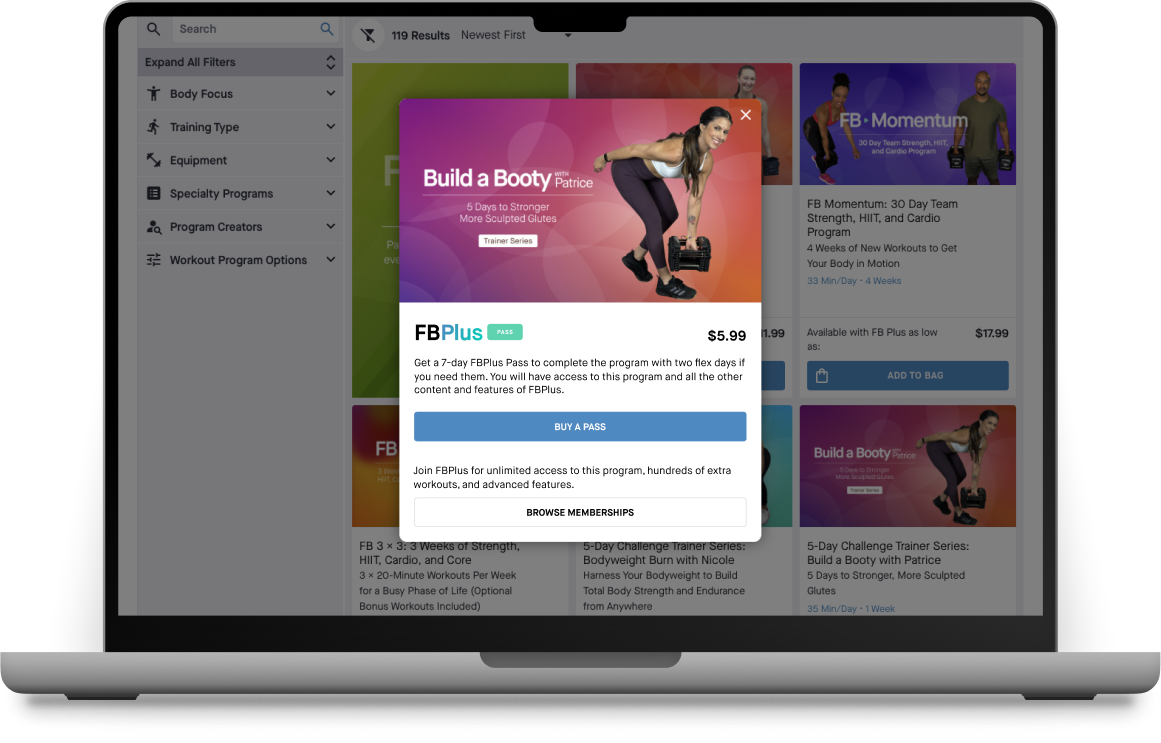
Although members found the recurring subscription model that includes all programs valuable, they had very negative sentiment toward the notion of renting programs. We leveraged this viewpoint to create FB Plus Passes, focusing on the entire platform rather than individual programs.
Keeping the Rent Now spirit.
With the original ask top of mind, we used messaging and branding to connect a pass purchase with a program. This “soft” connection gave us the freedom to have unlimited individual passes, or pass and program combinations, without direct systematic connections between products.
Offer flexibility at a premium.
Promoting passes for the new year and spring seasons allowed us to capture members with short term goals, willing to pay a premium for access only a few months out of the year.
Outcomes
Plus Passes became the second highest revenue stream in less than a year.
Increased FB Plus adoption in countries that don’t allow saved credit cards for recurring payments.
Generated more lifetime value from top pass purchasers than subscribers.
Expanding Fitness into Overall Wellness
Ultimately, the biggest hurdle for members reaching their goals wasn’t finding a workout or alternative ways to engage with premium content, it was food. Incorporating a more robust dietary focus into the platform was important for our members’ success, and in turn, their lifetime value. This was a zero-to-one project that required domain experts in nutrition and psychology, and a healthy dose of all the Design Principles I embrace.
Team
My Role
Product ownership, research strategy, design direction, stakeholder alignment, content strategy, domain expert coordination
Engineering
Technical direction, engineering leadership, full-stack development
Operations
Talent acquisition, content scheduling
Expert Team
Psychologist oversight, Registered Dietitian recipe curation and oversight, professional chef recipe development
Timeline
Research
1 Month
Design
2 Months
Engineering
4 Months
Research Methods
Usage Statistics
Surveys
Focus Groups
Member Advocacy Group
Feature-Flagged Beta Testing
Domain Expert Oversight
Design Decisions
Critical expertise.
Employing dietitians and chefs was a given, but because of the complex relationship between mental health and diet, we also brought in psychologists to help us create a product grounded in science with sensitivity to disordered eating and body image concerns.
Making meal planning inclusive.
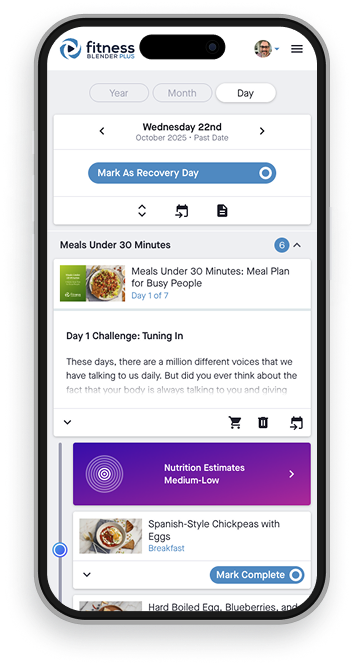
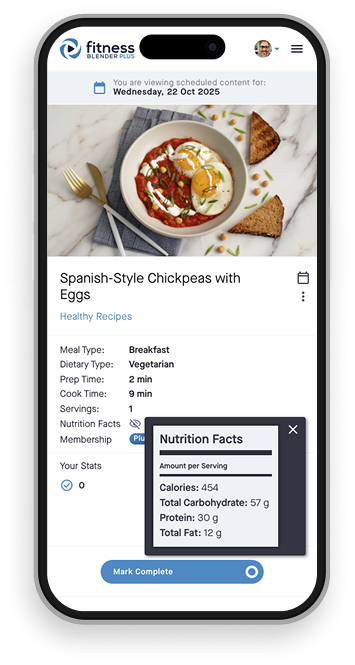
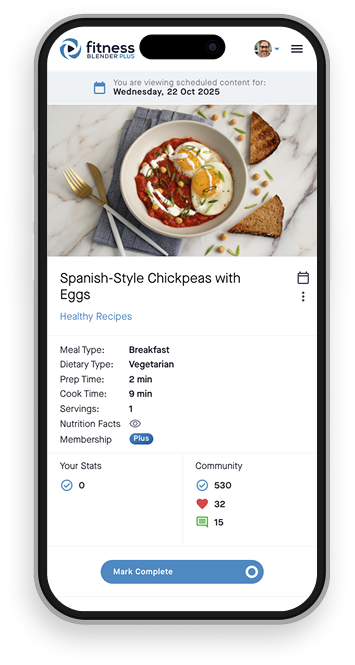
We built a flexible system that allowed members to follow a mindful eating approach or count calories and macros. From onboarding to stats reporting, members could control the information they used to monitor energy intake and output.
Getting friends and family on board.
A key factor in long-term diet change was helping members include their loved-ones. We designed each recipe to scale for the individual’s energy needs, as well as scaling for number of servings.
Acquisition and retention.
Rather than hiding all of this behind the paywall, we made many of the recipes free to use for search reach and free member engagement. For those who still didn’t want a full subscription, there’s a Pass for that.
Outcomes
Subscription members who engaged with meal plans 2.5x more likely to renew.
Increased completion rates for meal plans from less than 10% to over 50%.
Releasing the individual recipes for free boosted organic search traffic by 8%.
Fitness Blender
Fitness Blender
I joined Fitness Blender to both guide and implement the product design transformation of their YouTube and ad-supported website model into a premium wellness subscription platform. As the sole product manager and designer, I increased velocity by establishing a design system spanning web, mobile, video, and marketing assets, simplifying and automating design workflows, and partnering closely with engineering from ideation to implementation. These foundational steps gave us the space to achieve a 1.5x boost over ad-revenue in the first two years and an ROI of 3x the cost of development by focusing on the work that actually drove growth: help members find value quickly, convert free engagement into recurring revenue, and develop new capabilities that promoted overall wellbeing, not just exercise.
Finding Value
When we introduced FB Plus, we already had over 600 workouts available with hundreds more added over the next few years. From day-one it was clear that members were struggling to find workouts they wanted to complete. We could see long search sessions and high abandonment rates in the data, but it wasn’t clear why. Rather than investing the time to test and validate assumptions, we decided to Just Ask.
Team
My Role
Product ownership, research strategy, design direction, design technology
Engineering
Technical direction, engineering leadership, full-stack development
Timeline
Research
1 Week, then ongoing
Design
1.5 Weeks
Engineering
1 Month
Beta Period
2 Months
Research Methods
Usage Statistics
Screen Recording
Surveys
Card Sorting
Focus Groups
Think Aloud Protocol Tasks
Design Pattern Matching
Feature-Flagged Beta Testing
Design Decisions
Directly engage with members for research, testing, and validation.
Because our audience was already active and vocal in the platform’s community, we democratized the ideation process. In hours we had statistically viable results, in days we had 18% of our Plus members respond.
Using betas as a conversion tool.
Although the advanced search features were only part of the premium membership, we opened the beta to all members. This approach gave us more validation data, generated buzz in the community, and led to conversions for members who wanted to keep using the new tools.
Pairing complexity with simplicity.
Comments and wishlist items skewed toward our long-term power users, so we also had to make sure newer or less experienced members could engage quickly. We created Surprise Me as a one-click alternative to the complex search and filter options.
Outcomes
Reduced average time to select or schedule a workout from 19 to 7 minutes.
Increased workout completion rate after selecting a workout by 37%.
Free member engagement in the beta periods led to 11% conversion to FB Plus.
Surprise Me became our most heavily used feature, often dropping search times to seconds.
Monetizing Free Memberships
Fitness Blender’s first paid products were static workout programs compiled from their free workouts. After the launch of FB Plus, the stakeholders wanted to switch programs from pay-once to a rental model, with the caveat that rental would include all features of FB Plus. The ask was simple on the surface, add a Rent Now button to programs. We knew the actual intent was nuanced and the ask was too narrow, so we challenged the stakeholders to Embrace Ambiguity and let design provide alternative solutions.
Team
My Role
Product ownership, research strategy, design direction, stakeholder alignment
Engineering
Technical direction, engineering leadership, full-stack development
Timeline
Research
1 Week
Design
2 Days
Engineering
2 Months
Research Methods
Focus Groups
Competitive Analysis
Design Pattern Matching
Design Decisions
Program rental vs. platform rental.
Although members found the recurring subscription model that includes all programs valuable, they had very negative sentiment toward the notion of renting programs. We leveraged this viewpoint to create FB Plus Passes, focusing on the entire platform rather than individual programs.
Keeping the Rent Now spirit.
With the original ask top of mind, we used messaging and branding to connect a pass purchase with a program. This “soft” connection gave us the freedom to have unlimited individual passes, or pass and program combinations, without direct systematic connections between products.
Offer flexibility at a premium.
Promoting passes for the new year and spring seasons allowed us to capture members with short term goals, willing to pay a premium for access only a few months out of the year.
Outcomes
Plus Passes became the second highest revenue stream in less than a year.
Increased FB Plus adoption in countries that don’t allow saved credit cards for recurring payments.
Generated more lifetime value from top pass purchasers than subscribers.
Expanding Fitness into Overall Wellness
Ultimately, the biggest hurdle for members reaching their goals wasn’t finding a workout or alternative ways to engage with premium content, it was food. Incorporating a more robust dietary focus into the platform was important for our members’ success, and in turn, their lifetime value. This was a zero-to-one project that required domain experts in nutrition and psychology, and a healthy dose of all the Design Principles I embrace.
Team
My Role
Product ownership, research strategy, design direction, stakeholder alignment, content strategy, domain expert coordination
Engineering
Technical direction, engineering leadership, full-stack development
Operations
Talent acquisition, content scheduling
Expert Team
Psychologist oversight, Registered Dietitian recipe curation and oversight, professional chef recipe development
Timeline
Research
1 Month
Design
2 Months
Engineering
4 Months
Research Methods
Usage Statistics
Surveys
Focus Groups
Member Advocacy Group
Feature-Flagged Beta Testing
Domain Expert Oversight
Design Decisions
Critical expertise.
Employing dietitians and chefs was a given, but because of the complex relationship between mental health and diet, we also brought in psychologists to help us create a product grounded in science with sensitivity to disordered eating and body image concerns.
Making meal planning inclusive.
We built a flexible system that allowed members to follow a mindful eating approach or count calories and macros. From onboarding to stats reporting, members could control the information they used to monitor energy intake and output.
Getting friends and family on board.
A key factor in long-term diet change was helping members include their loved-ones. We designed each recipe to scale for the individual’s energy needs, as well as scaling for number of servings.
Acquisition and retention.
Rather than hiding all of this behind the paywall, we made many of the recipes free to use for search reach and free member engagement. For those who still didn’t want a full subscription, there’s a Pass for that.
Outcomes
Subscription members who engaged with meal plans 2.5x more likely to renew.
Increased completion rates for meal plans from less than 10% to over 50%.
Releasing the individual recipes for free boosted organic search traffic by 8%.
Fitness Blender
Fitness Blender
I joined Fitness Blender to both guide and implement the product design transformation of their YouTube and ad-supported website model into a premium wellness subscription platform. As the sole product manager and designer, I increased velocity by establishing a design system spanning web, mobile, video, and marketing assets, simplifying and automating design workflows, and partnering closely with engineering from ideation to implementation. These foundational steps gave us the space to achieve a 1.5x boost over ad-revenue in the first two years and an ROI of 3x the cost of development by focusing on the work that actually drove growth: help members find value quickly, convert free engagement into recurring revenue, and develop new capabilities that promoted overall wellbeing, not just exercise.
Finding Value
When we introduced FB Plus, we already had over 600 workouts available with hundreds more added over the next few years. From day-one it was clear that members were struggling to find workouts they wanted to complete. We could see long search sessions and high abandonment rates in the data, but it wasn’t clear why. Rather than investing the time to test and validate assumptions, we decided to Just Ask.
Team
My Role
Product ownership, research strategy, design direction, design technology
Engineering
Technical direction, engineering leadership, full-stack development
Timeline
Research
1 Week, then ongoing
Design
1.5 Weeks
Engineering
1 Month
Beta Period
2 Months
Research Methods
Usage Statistics
Screen Recording
Surveys
Card Sorting
Focus Groups
Think Aloud Protocol Tasks
Design Pattern Matching
Feature-Flagged Beta Testing
Design Decisions
Directly engage with members for research, testing, and validation.
Because our audience was already active and vocal in the platform’s community, we democratized the ideation process. In hours we had statistically viable results, in days we had 18% of our Plus members respond.
Using betas as a conversion tool.
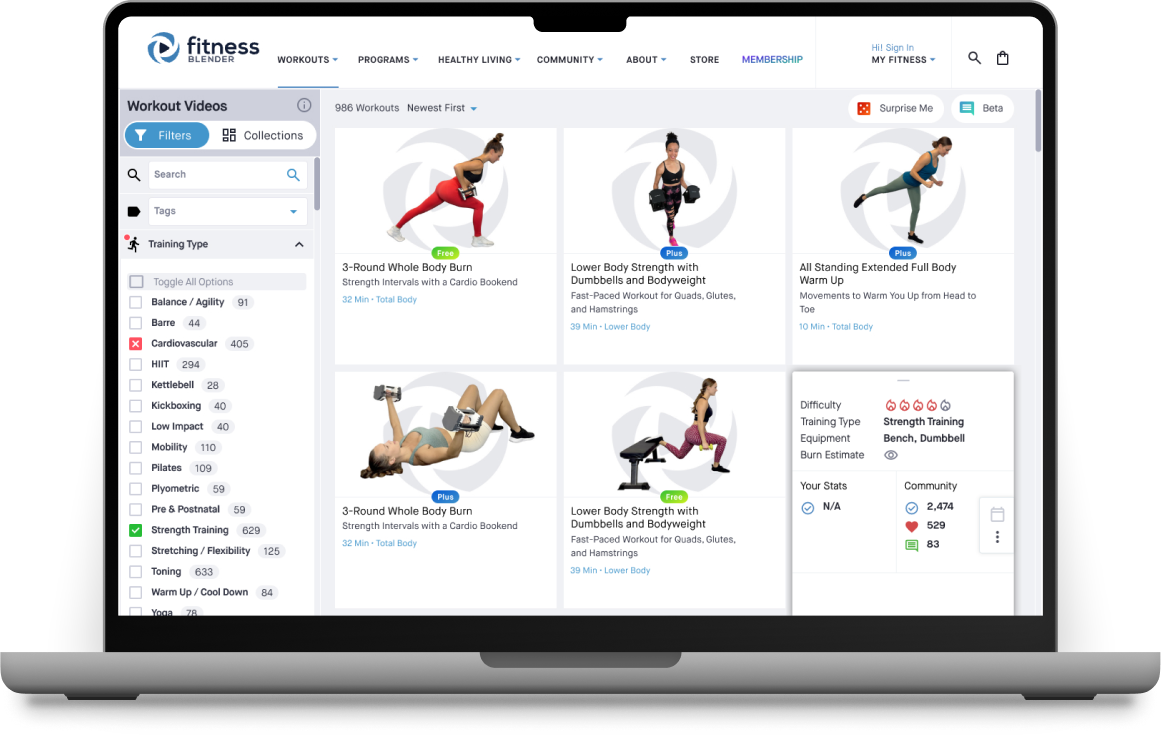
Although the advanced search features were only part of the premium membership, we opened the beta to all members. This approach gave us more validation data, generated buzz in the community, and led to conversions for members who wanted to keep using the new tools.
Pairing complexity with simplicity.
Comments and wishlist items skewed toward our long-term power users, so we also had to make sure newer or less experienced members could engage quickly. We created Surprise Me as a one-click alternative to the complex search and filter options.
Outcomes
Reduced average time to select or schedule a workout from 19 to 7 minutes.
Increased workout completion rate after selecting a workout by 37%.
Free member engagement in the beta periods led to 11% conversion to FB Plus.
Surprise Me became our most heavily used feature, often dropping search times to seconds.
Monetizing Free Memberships
Fitness Blender’s first paid products were static workout programs compiled from their free workouts. After the launch of FB Plus, the stakeholders wanted to switch programs from pay-once to a rental model, with the caveat that rental would include all features of FB Plus. The ask was simple on the surface, add a Rent Now button to programs. We knew the actual intent was nuanced and the ask was too narrow, so we challenged the stakeholders to Embrace Ambiguity and let design provide alternative solutions.
Team
My Role
Product ownership, research strategy, design direction, stakeholder alignment
Engineering
Technical direction, engineering leadership, full-stack development
Timeline
Research
1 Week
Design
2 Days
Engineering
2 Months
Research Methods
Focus Groups
Competitive Analysis
Design Pattern Matching
Design Decisions
Program rental vs. platform rental.
Although members found the recurring subscription model that includes all programs valuable, they had very negative sentiment toward the notion of renting programs. We leveraged this viewpoint to create FB Plus Passes, focusing on the entire platform rather than individual programs.
Keeping the Rent Now spirit.
With the original ask top of mind, we used messaging and branding to connect a pass purchase with a program. This “soft” connection gave us the freedom to have unlimited individual passes, or pass and program combinations, without direct systematic connections between products.
Offer flexibility at a premium.
Promoting passes for the new year and spring seasons allowed us to capture members with short term goals, willing to pay a premium for access only a few months out of the year.
Outcomes
Plus Passes became the second highest revenue stream in less than a year.
Increased FB Plus adoption in countries that don’t allow saved credit cards for recurring payments.
Generated more lifetime value from top pass purchasers than subscribers.
Expanding Fitness into Overall Wellness
Ultimately, the biggest hurdle for members reaching their goals wasn’t finding a workout or alternative ways to engage with premium content, it was food. Incorporating a more robust dietary focus into the platform was important for our members’ success, and in turn, their lifetime value. This was a zero-to-one project that required domain experts in nutrition and psychology, and a healthy dose of all the Design Principles I embrace.
Team
My Role
Product ownership, research strategy, design direction, stakeholder alignment, content strategy, domain expert coordination
Engineering
Technical direction, engineering leadership, full-stack development
Operations
Talent acquisition, content scheduling
Expert Team
Psychologist oversight, Registered Dietitian recipe curation and oversight, professional chef recipe development
Timeline
Research
1 Month
Design
2 Months
Engineering
4 Months
Research Methods
Usage Statistics
Surveys
Focus Groups
Member Advocacy Group
Feature-Flagged Beta Testing
Domain Expert Oversight
Design Decisions
Critical expertise.
Employing dietitians and chefs was a given, but because of the complex relationship between mental health and diet, we also brought in psychologists to help us create a product grounded in science with sensitivity to disordered eating and body image concerns.
Making meal planning inclusive.
We built a flexible system that allowed members to follow a mindful eating approach or count calories and macros. From onboarding to stats reporting, members could control the information they used to monitor energy intake and output.
Getting friends and family on board.
A key factor in long-term diet change was helping members include their loved-ones. We designed each recipe to scale for the individual’s energy needs, as well as scaling for number of servings.
Acquisition and retention.
Rather than hiding all of this behind the paywall, we made many of the recipes free to use for search reach and free member engagement. For those who still didn’t want a full subscription, there’s a Pass for that.
Outcomes
Subscription members who engaged with meal plans 2.5x more likely to renew.
Increased completion rates for meal plans from less than 10% to over 50%.
Releasing the individual recipes for free boosted organic search traffic by 8%.